1. What Are Fixed Expenses? 📌
Fixed expenses are costs that return every month (or periodically) and are often deducted automatically. They’re predictable and form the foundation of your spending pattern. Think, for example, of:
- Rent or mortgage
- Gas, water, and electricity
- Internet and phone
- Insurance
- Subscriptions
- Municipal taxes (often calculated on a monthly basis)
Precisely because they’re deducted automatically and feel self-evident, fixed expenses often slip out of sight. And that’s exactly why an overview is so important.
2. Why a Fixed Expenses Overview Is Essential 🧠
Without an overview, you don’t know how much of your income is already “locked in,” how much financial room you have for enjoyable things or saving, or whether you might actually be paying too much for certain fixed expenses. An overview creates peace of mind. You know where you stand and avoid surprises at the end of the month.
3. Step 1: List All Your Fixed Expenses 📝
Start simple. Gather your bank statements and contracts, and write down all fixed costs. Make a distinction between monthly and annual expenses. A practical overview might look like this:
Housing
- Rent or mortgage
- Homeowners’ association (VvE) contribution
- Gas and electricity
- Water
- Municipal taxes
Insurance
- Health insurance
- Contents and liability insurance
- Car insurance
Subscriptions & Services
- Internet and TV
- Mobile phone
- Streaming services
- Gym membership
Other Possible Fixed Costs
- Childcare
- Lease contracts
Add everything up, and you’ll immediately see which part of your income is fixed.
4. Step 2: Compare Fixed Expenses with Your Income ⚖️
Now comes the insightful part: compare your total fixed expenses with your net monthly income. A healthy guideline you can use (not a strict rule):
- 50–60% of your income on fixed expenses
- The rest for variable expenses, saving, and investing
Are you well above that? That’s not a judgement, but a signal. It means you have less flexibility and need to be extra mindful when making choices.
5. Step 3: Check Where You Can Save ✂️
A fixed expenses overview doesn’t just show what you pay—it also reveals where there’s room to save. Common saving opportunities include subscriptions you barely use, duplicate insurance policies, energy contracts that are too expensive, outdated phone or internet plans.Even small amounts add up. Ten euros per month is €120 per year. And often, there are several of those “tens.”
6. Automatically Gaining Insight into Fixed Expenses with Grassfeld 🤖
You can track and categorise fixed expenses and other transactions manually, but creating an overview in a notebook or Excel file takes time and discipline. The free Grassfeld app makes it much easier.
By linking your bank account, the app automatically recognises your fixed expenses and shows exactly how much you’re spending on them each month. It also immediately alerts you to changes—for example, if your internet bill suddenly increases because a discount period has ended.
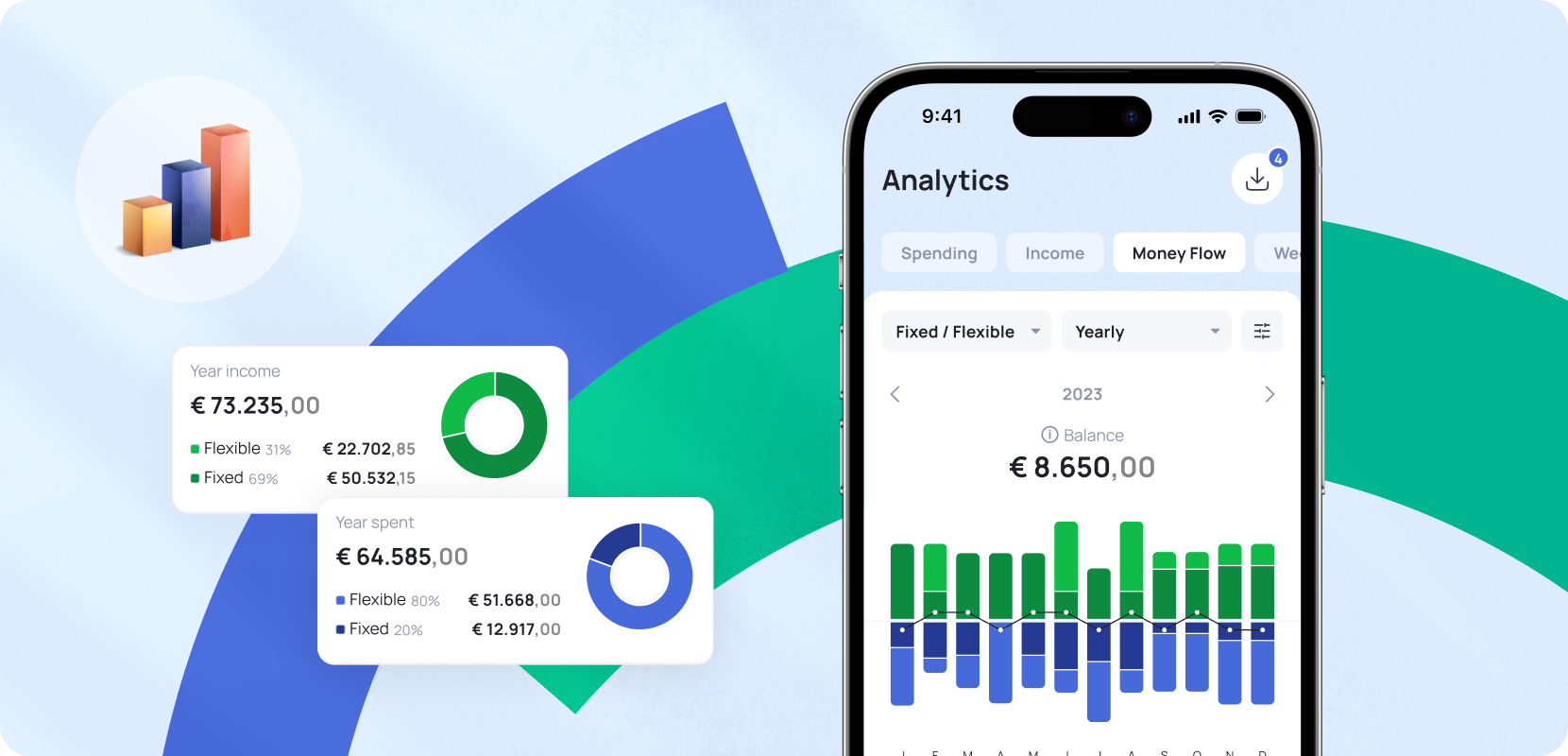
The app includes various statistics that instantly show what portion of your expenses is fixed and what portion is variable. In this way, Grassfeld acts as a fixed expenses overview that’s always up to date.
7. Combine Fixed Expenses with Budgets 🎯
Creating an overview of your fixed expenses is step one; managing them is step two. By combining fixed expenses with budgets for variable spending, you prevent fixed costs from eating up all your financial room. This lets you see not only what’s fixed, but also:
- How much you can spend on groceries
- How much room there is for leisure
- How much it’s realistic to save
This makes financial choices concrete and achievable.
8. Fixed Expenses Overview = Financial Peace of Mind 😌
Many people think saving money is complicated. In reality, it starts with insight. A good fixed expenses overview gives you control, peace of mind, and space to look ahead. Want this overview without spreadsheets or loose lists? Download the free Grassfeld app now from your app store. In the app, you can easily link your bank account, automatically see all your fixed expenses, and immediately gain insight into where your money is tied up. This way, you build more control and financial freedom—step by step.