1. What Falls Under ‘Groceries’? 🛒
Before discussing amounts, it’s important to clarify what we mean by groceries. In most households, this includes:
- Food and drinks (from the supermarket)
- Basic household products (such as toilet paper and cleaning supplies)
- Personal care items bought at the supermarket (such as shampoo and toothpaste)
Dining out, takeaway meals, or purchases from luxury or specialty stores are not included. If you do include them, your grocery budget will naturally be higher.
2. Tips for a Realistic Grocery Budget 💡
A good grocery budget doesn’t begin with national averages — it starts with your own situation. These steps will help guide you:
- Review your spending from the past 2 to 3 months. This gives a much more accurate picture than guessing.
- Identify your household type. A student shops and eats differently than a family with teenagers. Use averages as a guideline, not as a goal.
- Choose whether to think in weekly or monthly terms. Either is fine — as long as you stay consistent.
- Be specific. “We should spend less on groceries” is too vague. “A maximum of €120 per week” is measurable and actionable.
- Plan ahead. Weekly menus and set shopping days help avoid impulse purchases and reduce food waste.
3. Grocery Budget for 1 or 2 People 👥
For a single-person household in the Netherlands, the average grocery budget ranges between €150 and €250 per month, or €35 to €60 per week. Students and bargain shoppers often spend at the lower end, while those who eat organic or rely on convenience foods tend to spend more.
For two people, groceries are generally cheaper per person. Sharing meals, buying in bulk, and reducing waste lead to economies of scale. Most two-person households spend around €300 to €450 per month, or €70 to €105 per week in total.
4. Grocery Budget for a Family 👨👩👧👦
Families are the most diverse group in terms of grocery spending. How much a family spends depends on family size and the children’s ages. A typical Dutch family with two children spends around €500 to €800 per month, or €125 to €200 per week. Younger children cost less; teenagers cost more. Sports, allergies, and school meals also influence costs. In these cases, good planning is key to keeping spending under control.
5. How to Keep Control of Your Grocery Budget 📊
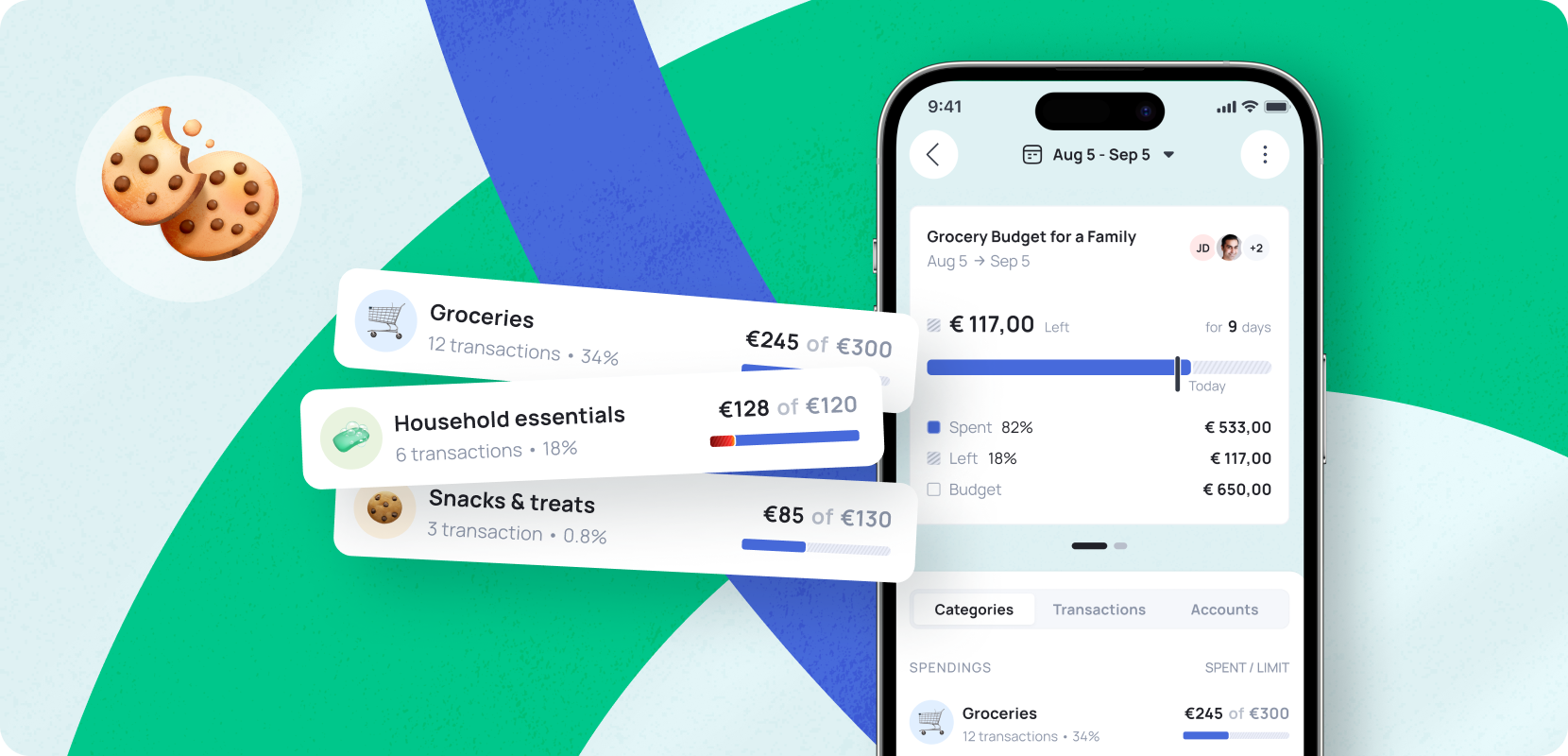
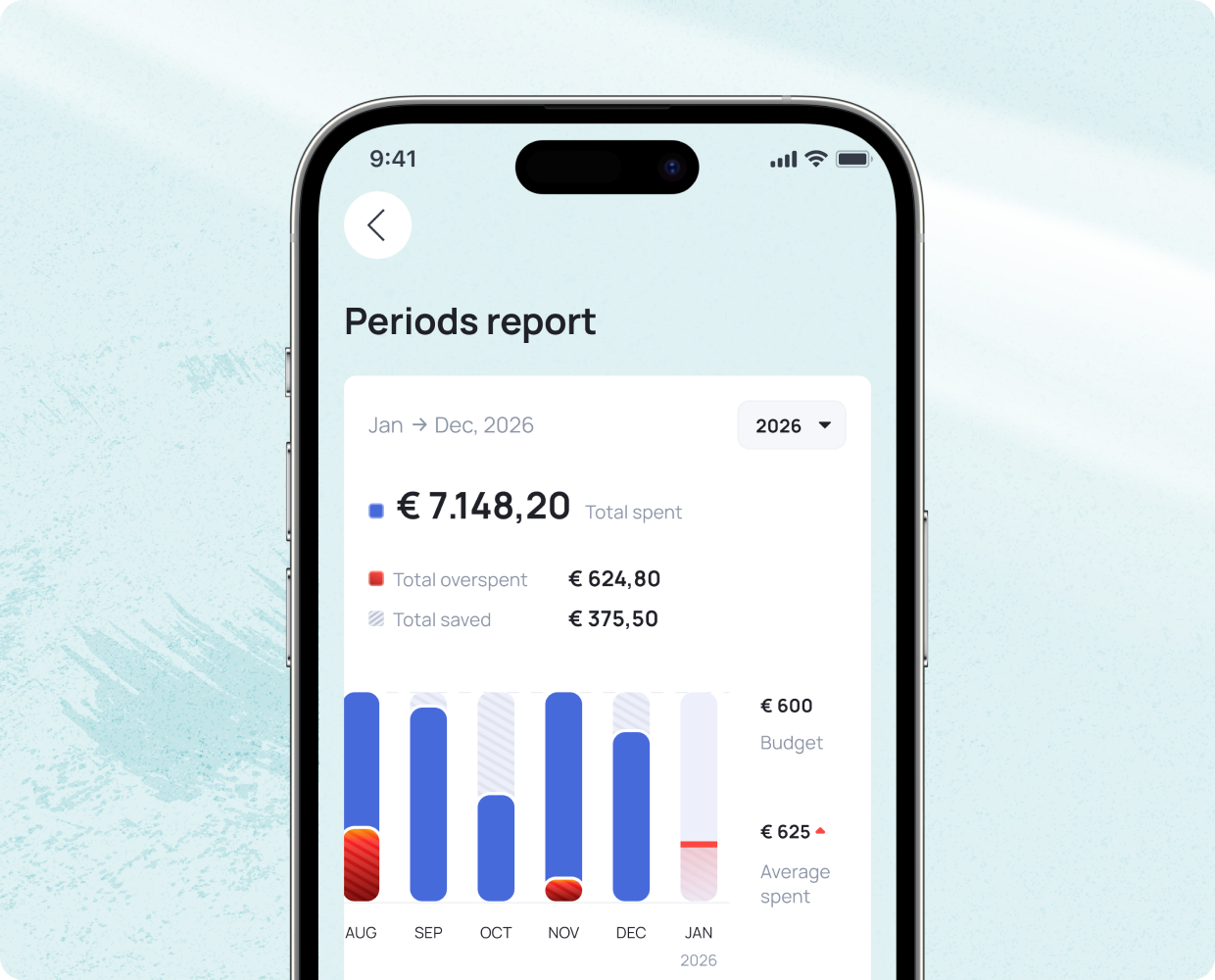
A grocery budget is only effective if you stick to it. With the Grassfeld app, your expenses are automatically categorised, so you always know whether you’re staying within your grocery budget. The app also helps you detect whether grocery costs are gradually increasing, thanks to its financial insights. This makes it easier to make timely adjustments and avoid surprises at the end of the month.
6. How to Save Money on Groceries 💸
We’ve previously published an article full of practical tips to help you save money on groceries. Think in terms of “eating the discounts”, smart planning, and choosing the most affordable supermarket.
Read the article about saving money on groceries.
7. A Budget Is Not a Restriction, but a Tool ⚖️
A grocery budget isn’t about denying yourself the things you enjoy — it’s about making informed, conscious choices. When you know where your money goes, you have more freedom to spend on what truly matters to you.
Want to see at a glance how much you're spending on groceries and set a custom budget immediately? With the Grassfeld app, your transactions are categorised automatically, and you can set budgets per category. This way, you always know where you stand — and you stay in control of your money without any extra effort.
📲 Download the free Grassfeld app from your app store now and experience the convenience for yourself.