What Is a Sinking Fund?
A sinking fund is a separate savings pot for an expense you know is coming. You may not always know the exact amount yet, but you roughly know what you need the money for and when you will need it. Examples include:
- A holiday
- Maintenance on your car or home
- School supplies and parental contributions
- Birthdays and holidays
- Municipal taxes
- Annual insurance premiums
- Replacing a laptop or phone
You estimate in advance how much you will need and divide that amount by the number of months remaining until the expense. Suppose you need €1,000 for municipal taxes in ten months. By setting aside €100 each month, you will not have to pay the entire amount from one month’s salary or your financial buffer.
What Is the Difference Between a Financial Buffer and a Sinking Fund?
A financial buffer is intended for unexpected costs. Think of a broken washing machine, a necessary repair, or a temporary loss of income. A sinking fund is intended for costs you can see coming. For example, you know that your car will need maintenance or that December is an expensive month for gifts every year.
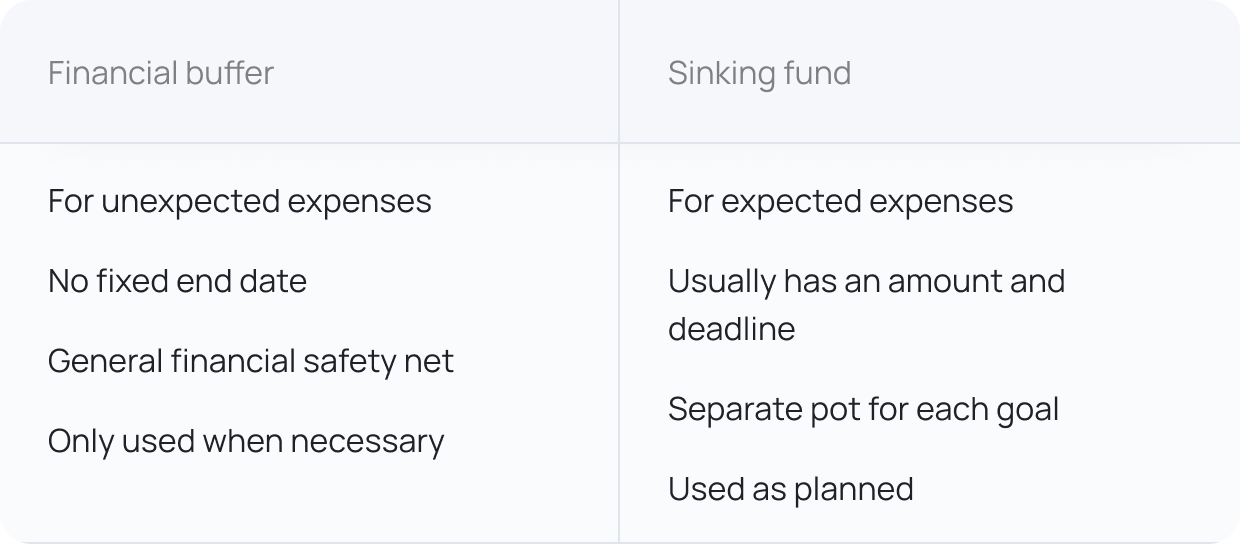
By keeping these pots separate, you prevent your financial buffer from being used every year for costs that were actually predictable.
How to Calculate the Monthly Amount
The calculation is simple:
Do you want to have €800 available for car expenses in eight months? Then you set aside: €800 ÷ 8 = €100 per month. If you do not yet know the exact amount, make a realistic estimate and consider adding a 10% margin.
Examples of Sinking Funds
Family 👨👩👦👦
A family expects to spend €600 each year on school supplies, excursions, and other school expenses. By setting aside €50 per month, the costs at the beginning of the school year become more manageable.
Student 🧑🎓
A student wants to have €480 available for a holiday in six months. If €80 per month turns out to be too much for the current budget, the student can lower the target amount, postpone the trip, or temporarily reduce other expenses.
Entrepreneur 🧑💻
An entrepreneur expects to need a new laptop costing approximately €1,350 in nine months.
€1,350 ÷ 9 months = €150 per month
However, make sure you keep business and personal cash flows separate. Business expenses may require a separate business reserve.
Which Sinking Funds Do You Need?
Review your expenses from the past year and note which higher costs recur regularly. Also look ahead to changes such as moving house, expanding your family, or taking a planned trip. It is better to start with two or three important pots than with ten small goals at once. For example, choose:
- Annual fixed bills
- Maintenance and replacement
- Holidays or festive periods
Make Expensive Months Predictable
Sinking funds do not make a holiday, repair, or tax bill cheaper. They do make the payment less unexpected. By converting large amounts into small monthly contributions, you maintain more control over your budget and keep your financial buffer available for real surprises.
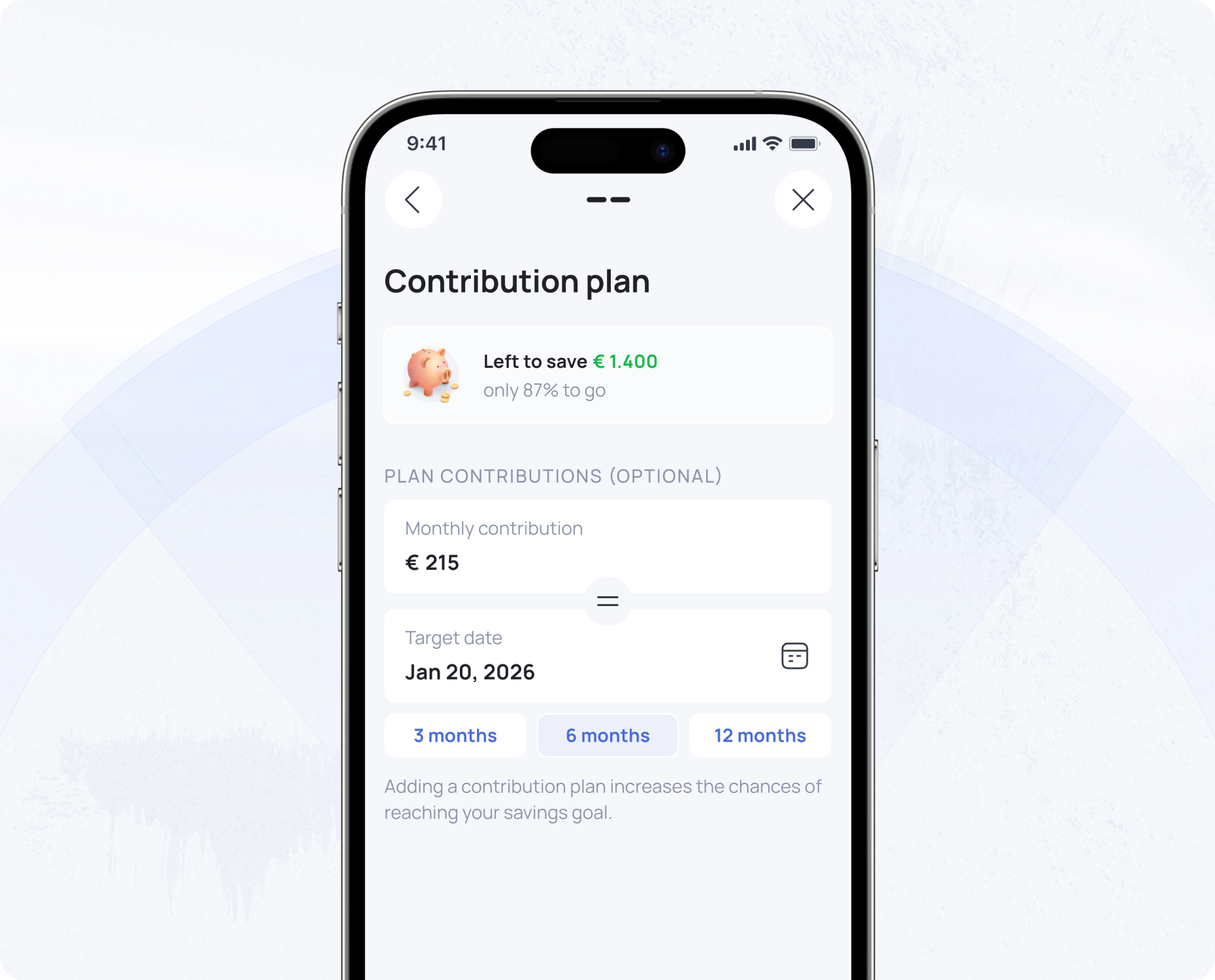
In Grassfeld, you can create savings goals, enter a desired amount and deadline, and track your progress. Create a separate goal for each important annual expense and check every month whether you are still on track.