
How Does Cash Stuffing Work?
You start with the amount you have available after paying your fixed expenses. You divide this in advance between different spending categories. Suppose you have €700 available this month:
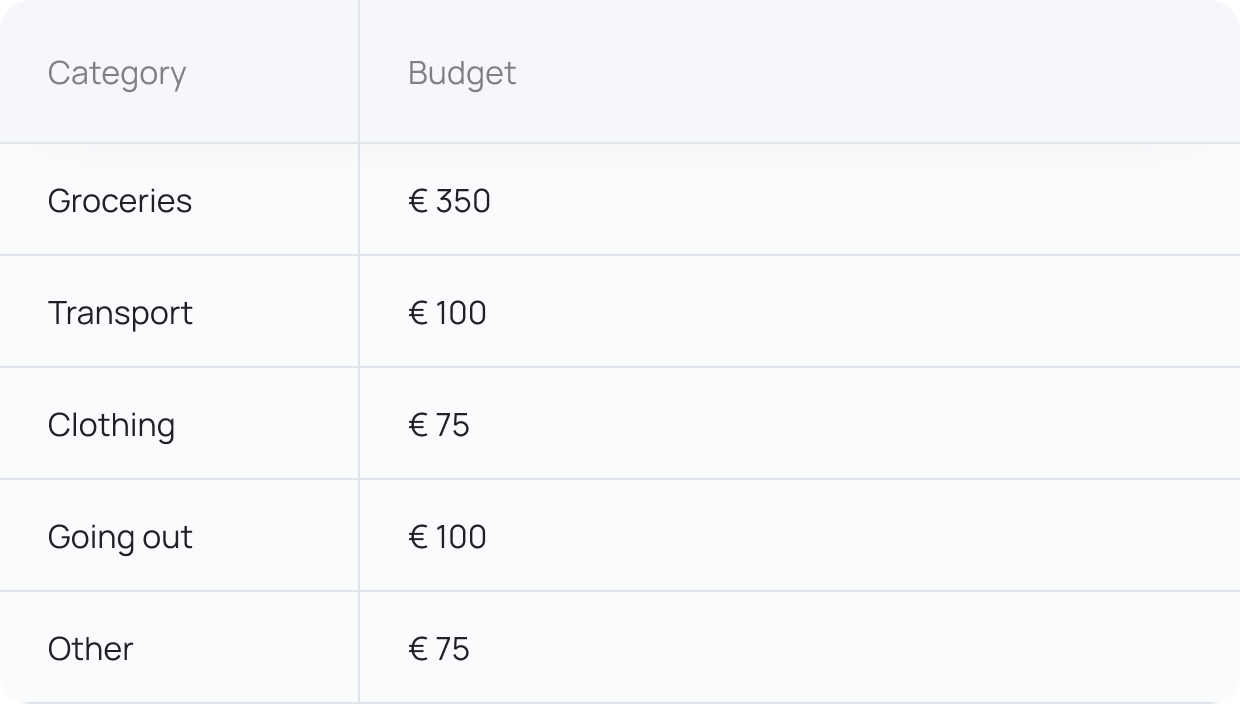
With the traditional method, you withdraw this money in cash and put it into labeled envelopes. Every time you buy something, you pay from the appropriate envelope. The advantage is clear: you can see and feel how much money you still have. When the envelope for going out is empty, you can no longer go out for dinner or to the cinema that month, unless you consciously move money from another category.
What Are the Benefits?
Cash stuffing makes budgeting tangible. You cannot continue using your debit card without noticing that a category has already been exhausted. The method can be particularly helpful if you:
- Regularly spend more than planned
- Find it difficult to keep track of small payments
- Need clear limits
- Want to be more conscious of variable expenses
You also decide what is important in advance. In a sense, you give your money a purpose before you can spend it.
Are There Any Disadvantages?
Cash stuffing with physical cash does not suit everyone. An increasing number of shops and services mainly use digital payments. You also cannot pay for subscriptions, online purchases, and direct debits from a physical envelope.
Keeping larger amounts of cash at home can also be inconvenient or unsafe. And because payments do not automatically appear in your bank overview, you must carefully keep track of exactly what the money was spent on. This is why many people choose digital cash stuffing.
How Cash Stuffing Works Without Cash
With digital cash stuffing, the basic rules remain the same. You divide your money between categories in advance but use digital budgets instead of paper envelopes. The translation is simple:
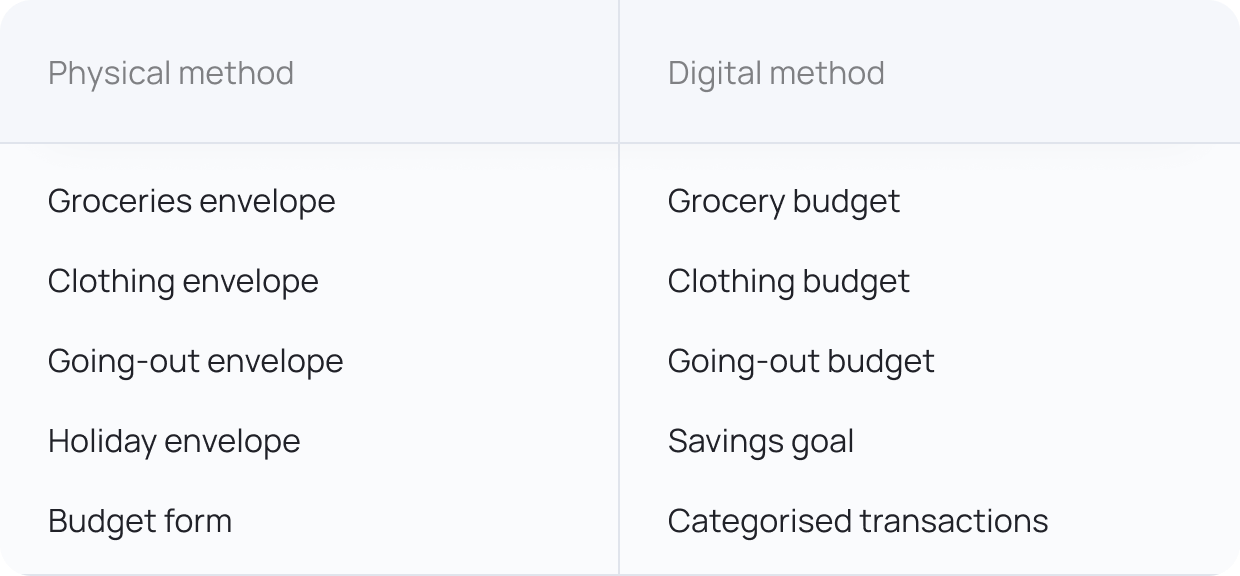
In Grassfeld, you can set budgets for different categories. After linking your bank account, transactions are largely categorized automatically. This allows you to see how much you have spent and how much room remains within each budget.
Do you want to reserve money for a holiday, a new laptop, or an annual bill? You can create a separate savings goal for this. This allows you to apply the same principle without keeping receipts or manually removing amounts from envelopes.
A Simple Way to Get Started
First, look at your expenses from the past three months. Then choose three categories you want to gain more control over, such as groceries, eating and drinking out, and clothing. Set a realistic budget for each category. Do not immediately start with extremely low amounts. A budget only works when it is achievable.
Regularly check how much room you have left throughout the month. Is a budget almost exhausted? Then you can spend less, postpone a purchase, or consciously move money from another category.
Cash or Digital?
Cash stuffing with physical money can work well if you like dividing your money literally. Digital cash stuffing is more convenient if you mainly use a debit card, shop online, and want automatic insight into your transactions. The best method is ultimately the one you continue to use. The goal is not to fill as many envelopes as possible, but to make clear decisions in advance about where your money is allowed to go.
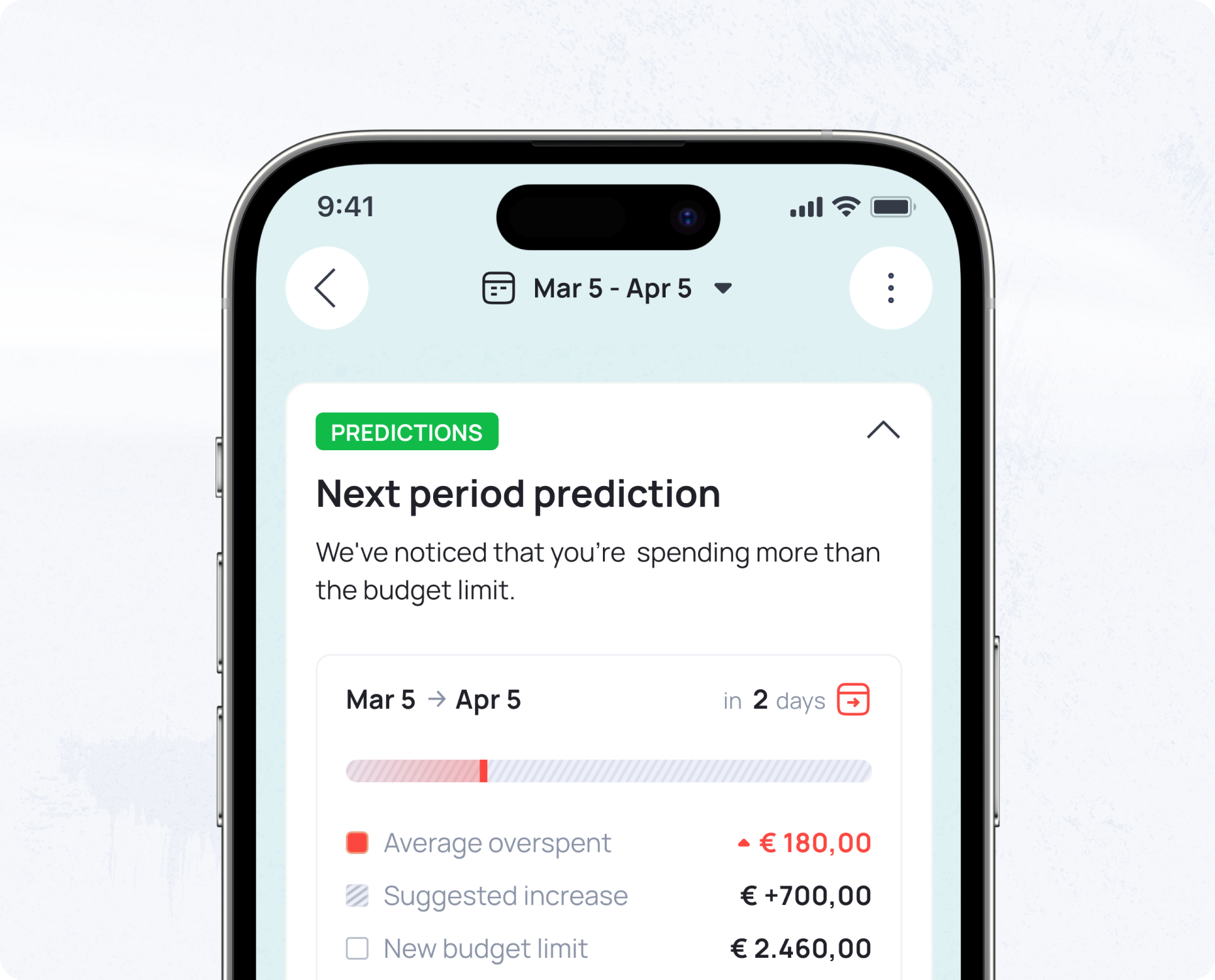
With Grassfeld, you can create digital budgets, automatically categorize transactions, and set savings goals. This allows you to apply the envelope method without cash and see at any time how much room you still have.